Dev.to
Where developers share what they're learning.
Grow your DR (guaranteed) & Rank on Google, ChatGPT, and Claude
🚀 DR Boost — £199
5× dofollow backlinks from DR 20–70 sites
⚡ DR Mega Boost — £279 Best value
10× dofollow backlinks — 30% cheaper per link
Quick summary of Dev.to
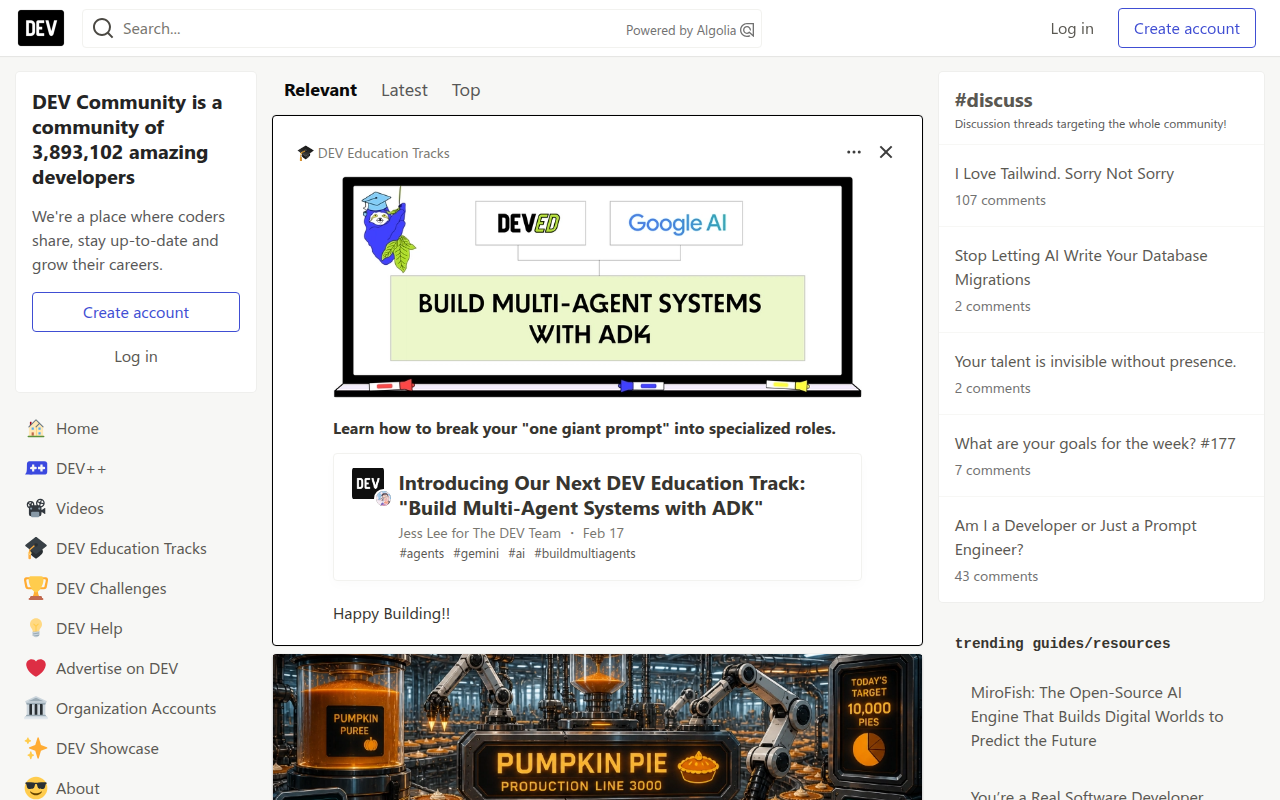
DEV (dev.to) is the open-source developer community and publishing platform, founded in 2016 by Ben Halpern, Jess Lee, and Peter Frank. Now serves 1M+ active monthly users hosting 100K+ developer-written articles as one of the largest developer communities globally. The open-source-friendly Medium for software engineers — combining publishing platform + community engagement + developer-specific UX. Differentiated by free-for-everyone model (no paywall for readers, no fees for writers), developer-native UX (code syntax highlighting, embedded runnable playgrounds via CodePen/JSFiddle, markdown-first writing), and open-source ethos (entire platform code is open source as Forem). Core features: free article publishing with no algorithm gatekeeping, markdown editor with code-aware syntax highlighting and embedded code playgrounds and image upload, reaction system (heart, unicorn, bookmark, reading-time-saving), threaded comments and discussions, tag system for discovery (javascript, react, python, devops), Series for multi-part articles, reading list bookmarks, DEV Connect direct messaging, webhooks and RSS for cross-posting, branded developer profile with skills and social links, community Listings job board, embedded podcasts and videos, DEV community virtual events and hackathons, Forem open-source platform for self-hosting communities. Best for developer personal brand building with technical content establishing expertise and reach, open source project promotion writing about libraries/tools to drive adoption, technical knowledge sharing through tutorials and deep-dives, cross-posting articles from own blog for wider DEV reach, learning new technologies via community-written tutorials, DevRel and developer marketing reaching engaged technical audiences, hiring developers via Listings job board, building in public sharing startup engineering journey. Pricing: 100% free for everyone forever (no paywall, no fees), Forem open-source platform free for self-hosting (with paid hosting/support available), sponsored Listings at $50-$500 per job board post. Direct competitors: Medium (broader, paywall, Partner Program pays writers), Hashnode (custom domain blogs + Hashnode network), HackerNoon (tech publication with paid tier), Substack (subscription publishing), Ghost (own-platform), CodeProject (legacy developer site), Stack Overflow Blog (Q&A-focused), Reddit r/programming + r/webdev (forum-style), Twitter/X developer Twitter, LinkedIn (broader professional but increasingly used for tech content). DEV wins on free-for-everyone model and developer-native UX and community engagement quality; Medium wins on monetisation via Partner Program; Hashnode wins on custom domain ownership; HackerNoon wins on technical journalism polish.
⏱ 30-second verdict
- Free for everyone with no paywall — most welcoming developer community platform
- Developer-native UX (code syntax, embedded playgrounds, markdown) Medium can't match
- Doesn't pay writers like Medium Partner Program; algorithmic distribution more limited
About
Open-source publishing platform for developers. Cross-post from your own blog, get distribution to a 1M+ developer audience.
🎯 Why it's useful
Free distribution to a relevant developer audience. Cross-posting (with canonical URLs) doesn't hurt your SEO.
💜 Our take
The community votes posts up or down. Quality posts get genuine reach without ads.
Key Features
Integrations
✓ Best for
Solo developers and technical writers who want built-in distribution to an engaged developer audience without managing their own blog infrastructure. Great for sharing learning, tutorials, and building a technical reputation.
✗ Not ideal for
Founders seeking non-technical audience reach or those wanting full design/branding control—Dev.to is developer-focused and heavily templated. Not ideal if you need sophisticated SEO optimization or monetization features.
How indie founders use Dev.to
Developer personal brand
Write technical content to establish expertise + reach. 1K-10K+ developer views per article for good content.
Open source project promotion
Write about your library/tool to drive adoption. DEV's audience genuinely tries new developer tools.
Technical tutorials + deep-dives
Share knowledge with engaged technical community. Comments + discussions add value vs spam.
DevRel + developer marketing
DEV is one of the top channels for developer audience reach. Free distribution to engaged technical audience.
DEV (dev.to) is the open-source developer community and blogging platform, founded in 2016 by Ben Halpern, Jess Lee, and Peter Frank as a side project that grew into one of the largest developer communities globally. Now serving 1M+ active monthly users and hosting 100K+ developer-written articles, DEV is the open-source-friendly Medium for software engineers — combining publishing platform + community engagement + developer-specific UX in a way generalist platforms can't match. What makes DEV distinctive is the developer-native culture + open-source ethos + zero monetization friction. Medium charges readers + pays writers; DEV is free for everyone with no paywall. The entire platform code is open source (Forem). Articles support code syntax highlighting, embeddable runnable code (CodePen, JSFiddle), markdown-first writing, and the community engagement model favours technical depth over self-promotion. For developers wanting to share knowledge, build personal brand within the engineering community, or learn from other practitioners — DEV is the obvious destination. The core features: • **Free article publishing** — no paywall, no algorithm gatekeeping (algorithmic sort exists but doesn't gate visibility) • **Markdown editor** — code-aware writing with syntax highlighting, embedded code playgrounds, image upload • **Reactions** — heart, unicorn (special), bookmark, plus reading-time-saving reactions • **Comments + discussions** — threaded discussion below every article • **Tags + topics** — tag system for discovery (javascript, react, python, devops, etc.) • **Series** — group multi-part articles into series • **Reading list** — bookmark articles for later reading • **DEV Connect** — direct messaging between community members • **Webhooks + RSS** — for cross-posting your DEV articles to other platforms • **Profile customisation** — branded developer profile with skills + social links • **Listings + jobs board** — community jobs board for hiring developers • **Podcasts + videos** — embedded podcast + video content • **DEV community events** — virtual conferences + hackathons + live coding events • **Open source (Forem)** — entire platform code is open source; community can self-host For developers + technical founders + DevRel professionals the use cases: • **Developer personal brand building** — write technical content to establish expertise + reach • **Open source project promotion** — write about your library/tool to drive adoption • **Technical knowledge sharing** — share tutorials, deep-dives, problem-solving experiences • **Cross-posting + syndication** — publish on DEV in addition to your own blog for wider reach • **Learning new technologies** — read community-written tutorials for real-world implementation • **DevRel + developer marketing** — DEV is one of the top channels for developer audience reach • **Hiring developers** — listings reach engaged technical audience • **Building in public** — share startup engineering journey with technical audience The pricing is delightfully simple: free for everyone, forever. No paywall for readers. No fees for writers. No premium tier. Forem (the open-source platform DEV runs on) is also free if you want to self-host your own community. DEV is funded by minimal sponsorship + paid Listings (job board posts) + open-source consulting. The free-forever model is sustainable + aligned with developer community values. Where DEV wins clearly: free for everyone with no paywall friction; developer-native UX (code syntax, embedded playgrounds, markdown-first) Medium can't match; the community engagement is genuinely technical (comments are usually deep + helpful vs Medium's frequent generic praise); open-source platform aligns with developer values; the audience is millions of practicing developers who engage with technical content. Where it loses: less polish + sophistication than Medium for non-technical content; algorithmic distribution is more limited than Medium's curated topics (your visibility depends largely on tags + community sharing); doesn't pay writers like Medium's Partner Program (DEV believes in free knowledge but you don't earn money); SEO performance is meaningful but Medium articles still tend to rank higher for similar topics. My take: for technical founders, developer-focused content creators, and engineers building personal brand — DEV should be part of your publishing strategy. Cross-post your technical articles from your own blog to DEV for additional reach. Don't make DEV your primary platform (publish on your own blog first, then syndicate), but the additional 1K-10K+ developer-audience views per article are valuable for building reputation. The community is genuinely good — comments add value rather than noise. Pair DEV with Hashnode (for additional tech-focused reach) and your own blog (for SEO + audience ownership) for a complete developer content distribution strategy.
Pricing
DEV (everyone)
- ✓Free article publishing
- ✓Free reading + commenting
- ✓Community access
- ✓No paywall, no fees
Forem (self-host)
- ✓Self-host the DEV platform
- ✓Customise for your community
- ✓Open-source codebase
- ✓Forem company offers paid hosting/support
Sponsored Listings
- ✓Job board postings
- ✓Increased visibility
- ✓Reach developer audience
- ✓Pay-per-listing model
Free · Optional premium membership for enhanced features
Frequently asked questions
DEV vs Medium for technical writing?
DEV is developer-native (free, code-aware editor, open-source platform, technical community engagement). Medium is broader (paywall, broader audience, paid Partner Program). For pure technical content, DEV's community engagement is better. For non-technical content with monetisation, Medium. Many developers cross-post on both for combined reach.
DEV vs Hashnode?
Hashnode lets you publish on your own custom domain (with Hashnode-hosted blog) + cross-post to Hashnode network. DEV is purely on dev.to. Hashnode gives you SEO ownership; DEV gives you broader DEV network reach. Many developers use both — own domain via Hashnode + cross-post to DEV for visibility.
Is DEV really free?
Yes — completely free for everyone forever. No paywall. No fees for writers. Funded by minimal sponsorships + Listings + open-source consulting (Forem). The free-forever model aligns with developer community values. Forem platform itself is open source if you want to self-host your own community.
Does DEV pay writers?
No — DEV doesn't pay writers like Medium's Partner Program. The model is free knowledge sharing within the developer community. If monetisation matters, use Medium Partner Program or build your own paid blog (Ghost/Substack). DEV is for reach + reputation + community, not revenue.
How do I get more reach on DEV?
Tag well (use 4 relevant tags including major ones like #javascript, #python, #webdev), publish consistently (weekly is meaningful), engage with other writers in comments + reactions, write about trending topics + new technologies, include code examples + tutorials (DEV's audience loves practical content). Top writers on DEV reach 10K-50K+ views per article.
Reviews
No reviews yet — be the first.