Collection №20 — Updated 9 August 2026
The 5 best user feedback boards in 2026
Every tool here does the same core job: a public page where users post feature requests and vote, so demand gets counted instead of scattered across DMs and email. The differences are in what surrounds the board. Canny and Featurebase bundle roadmaps, changelogs and more; Fider and Nolt stay close to the board itself. Work out how much of that suite you will use before you commit.
| Tool | Type | Cost | Verdict |
|---|---|---|---|
| Feedback suite | Free | ★ Best overall | |
| Feedback platform | Free | Most established | |
| Embeddable feedback | Free trial | Best in-app widgets | |
| Open-source board | Free | Best self-hosted | |
| Hosted board | Free trial | Simplest to run |
Featurebase
★ Best overallFeedback boards, roadmap and changelog in one modern product
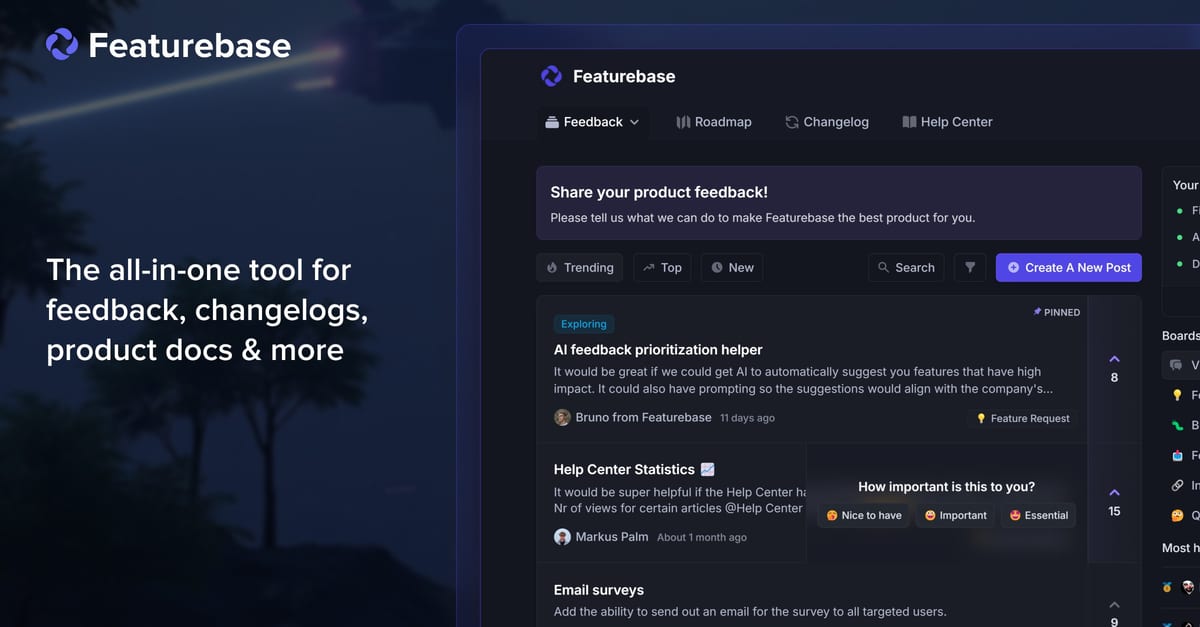
Boards, roadmap, changelog and in-app surveys in one product, and the free plan is enough for a small SaaS. Users can post and vote through a widget without leaving your app. If you are setting up a public feedback board from scratch, start here.
Visit FeaturebaseCanny
Most establishedThe established feedback platform with the deepest integrations

The incumbent, and the board you have already seen behind other companies' feedback links. It connects requests to your CRM so you can rank them by which customers are asking. The free plan is small but real. Larger teams with a support stack to plug in end up here.
Visit CannyFrill
Best in-app widgetsIdeas, roadmap and announcements as widgets inside your app
Three modules: an ideas board, a roadmap and announcements, each of which can sit inside your app as a widget. The design is clean and light. Pick it when you want feedback collected inside the product instead of on a separate portal.
Visit FrillFider
Best self-hostedAn open-source voting board you host yourself
One board with posts, votes and comments, and you run it yourself with Docker. Feedback stays on your servers and there is no subscription to outgrow. It skips the extras the hosted suites bundle. If you can deploy a container and want to own the data, choose this.
Visit FiderNolt
Simplest to runA single voting board with nothing to configure
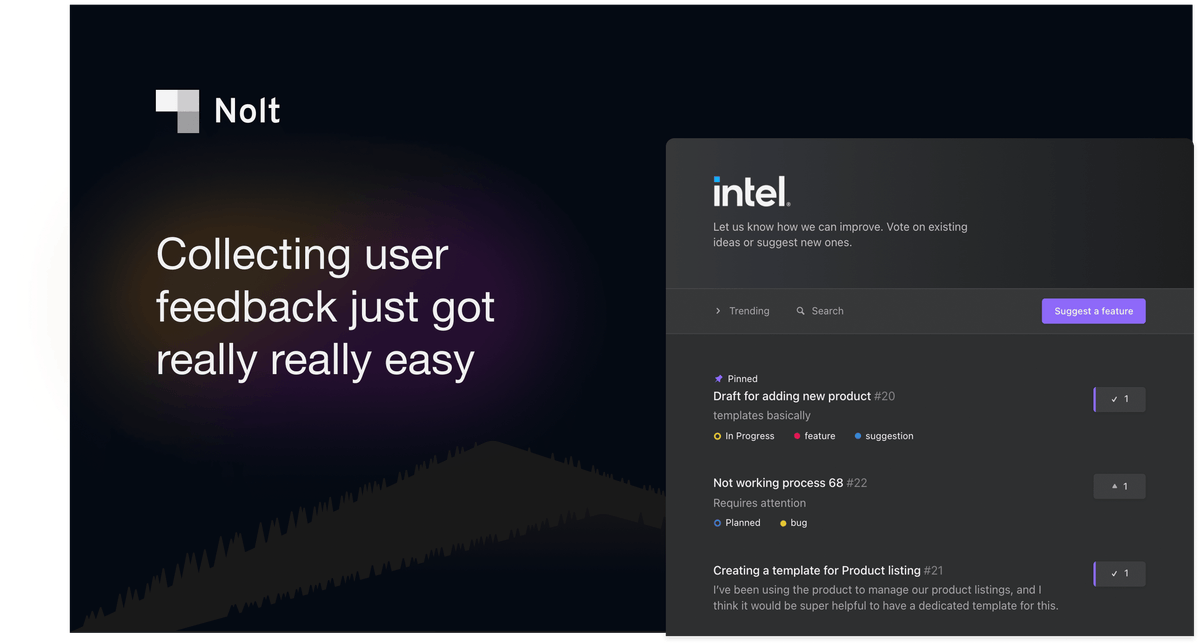
A single board with voting, comments and a roadmap view, and almost nothing to configure. Pricing is per board rather than per tracked user, so the bill stays predictable as your audience grows. If you want a feedback link in your footer this week, this is the quickest way to get one.
Visit NoltFrequently asked questions
What is the best free tool for collecting feature requests?
Featurebase and Canny both have free plans that will run a first public feedback board; Featurebase's stretches further for a small product. Fider is free in a different way: the software is open source, so self-hosting costs nothing beyond the server it runs on. Frill and Nolt are paid tools with trials.
What is the difference between Canny and Featurebase?
They cover the same ground of feedback boards, a roadmap and a changelog. Canny is the older product, with deeper integrations and features aimed at larger teams, such as linking requests to CRM data so you can see which customers are asking. Featurebase is newer, adds surveys and a knowledge base, and has the roomier free plan, so smaller SaaS teams tend to start there.
Is there an open-source alternative to Canny?
Fider is the established one: an open-source voting board with posts, votes and comments that you can self-host with Docker. Feedback never leaves your servers, which matters for teams with strict data rules. It is deliberately minimal, so expect the board itself rather than Canny's roadmap and changelog extras.