The 10 Best Startup Launch Platforms & Directories in 2026 (Free Product Hunt Alternatives Included)
The definitive list of startup launch platforms and startup directories in 2026 — including the best free alternatives to Product Hunt and Uneed. Every Domain Rating pulled live from Ahrefs' free API, every featured image taken from the platform's own Open Graph card.

The best startup launch platforms and directories in 2026 are Product Hunt, Tiny Startups, BetaList, Startups.fm, Indie Hackers, Startup Spotlight, Scrappy Startups, Hacker News, Smashing Startups, and Reddit. That's the short answer. The long answer — which one fits your launch, which ones are free, and which are genuine alternatives to Product Hunt and Uneed — is below, with every Domain Rating pulled live from Ahrefs' free API in July 2026 and each site's own Open Graph image, so you can see exactly how these platforms present themselves.
All 10 startup launch platforms at a glance
The default daily launch platform for tech products. Massive reach, brutal competition.
Visit →Free weekly launch platform for indie makers — the best free alternative to Product Hunt and Uneed.
Visit →The pre-launch platform: early adopters who want your product before it's finished.
Visit →Curated startup directory of 1,600+ hand-picked startups, browsable by category, country, and city.
Visit →The community where bootstrapped founders share real revenue numbers.
Visit →Micro-startup directory and leaderboard — every listing gets a do-follow backlink and verified badge.
Visit →Directory of profitable bootstrapped startups and exactly how they make money.
Visit →The highest-variance free launch channel on the internet. Technical audience, zero tolerance for hype.
Visit →One big smash button, one hand-picked indie startup at a time. Zero feeds, zero ads.
Visit →Thousands of niche communities — the biggest free distribution channel if you respect the rules.
Visit →1. Product Hunt — DR 91

Still the one everybody means when they say "we're launching." Product Hunt has been curating "the best new products, every day" since 2013, and the mechanics haven't changed much: the leaderboard resets at 12:01 a.m. Pacific, the community upvotes through the day, and the top products get featured in the newsletter and on the homepage. A strong finish can bring thousands of visitors, early customers, and a wave of "seen on Product Hunt" credibility that compounds for months.
The catch is that everyone knows this, so launch day is a contact sport. You're competing against teams who've spent weeks warming up their networks, prepping galleries, and drafting their maker comment. Go in prepared or don't go in at all: launch midweek, be online all day answering comments, and treat the first hour like a product demo you can't pause.
2. Tiny Startups — DR 70 · The Best Free Product Hunt Alternative
Tiny Startups is a free startup launch platform for indie makers, and the strongest free alternative to Product Hunt and Uneed on this list. Full disclosure: it's ours — but the reason we built it is exactly the gap most founders hit after a Product Hunt launch: 24 hours of adrenaline, then silence. Tiny Startups runs on a weekly leaderboard instead. Your launch competes Monday through Sunday, upvotes and visits both count toward your rank, and the top two products each week earn a permanent #1 or #2 Product of the Week badge. A full week means a Thursday launch isn't a death sentence, and slow-burn products get time to climb.
Launching is free — no invite, no paywall, no launch-day lottery. Listings reach an audience of 20,000+ early adopters and indie makers, and every startup gets its own page with a DR 70 backlink, upvote history, and an optional launch-week deal for early users. Compare that with Uneed (DR 75, where guaranteed homepage visibility is a paid feature): Tiny Startups gives you a comparable-authority backlink and a full week on the leaderboard for free. Paid options exist to skip the queue or get featured placement, but the leaderboard itself is pure merit — nobody can buy their way to #1.
3. BetaList — DR 76
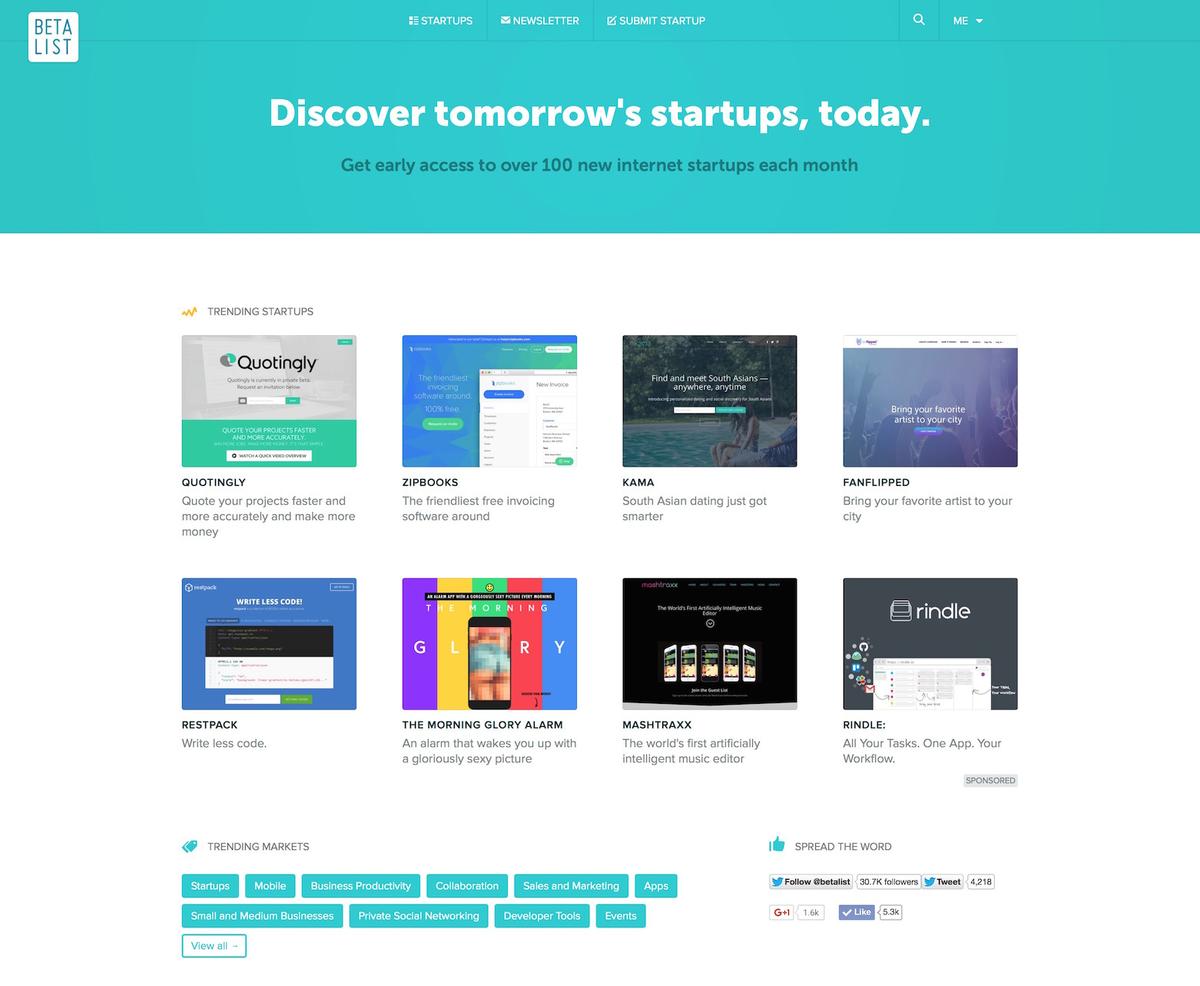
BetaList occupies a niche nobody else has really claimed: the pre-launch window. Its tagline — "discover and get early access to tomorrow's startups" — is literal. The audience is early adopters who enjoy trying half-finished things, which makes it the right place to build a waitlist and collect feedback before your public launch, not after it.
Marc Köhlbrugge has been running it since 2010, and the format has stayed refreshingly simple: a screenshot, a one-liner, a link. Free submissions go through a review queue that can take a few weeks; paying gets you reviewed faster. Come with a clean landing page and a working signup form — that's the whole game here.
4. Startups.fm — DR 45 · The Best Curated Startup Directory
Startups.fm is a curated startup directory in the truest sense: 1,600+ hand-picked startups across AI, SaaS, dev tools, fintech and more, browsable by country, city, and category, with funding rounds and open roles tracked alongside each profile. Where Product Hunt and Uneed are launch stages you pass through in a day, Startups.fm is a permanent, structured record — the reference-library model rather than the leaderboard model, and one of the few startup directories where a human has actually looked at every listing.
That makes it a different kind of valuable. A listing won't spike your analytics on day one, but it sits in a clean, well-organised index that people genuinely browse when researching a space — and that search engines and AI assistants crawl when someone asks "what startups are working on X?" File it under "twenty minutes now, compounding returns later."
5. Indie Hackers — DR 81
Indie Hackers isn't a launch platform and will punish you for treating it like one. It's a community built around radical transparency — founders sharing the strategies and actual revenue numbers behind their businesses. Courtland Allen started it in 2016, Stripe acquired it a year later, and it's been independent again since 2023, which somehow suits it.
The move here isn't "post your launch link." It's documenting the journey: your first paying customer, the pricing change that doubled conversion, the month everything went sideways. Genuine milestone posts routinely outperform polished announcements, and the relationships you build in the comments are worth more than the traffic.
6. Startup Spotlight — DR 36 · Guaranteed Do-Follow Backlinks
Startup Spotlight is a startup directory and leaderboard for micro-startups, hand-curated by humans and updated weekly — and it's refreshingly honest about its model. Ranking is paid, and the site says so upfront. No pretence of algorithmic meritocracy: you know exactly what you're buying, which is more than can be said for a lot of "free" directories with mysterious featured sections. As an alternative to Uneed's paid placement, the value proposition is simpler and the audience more focused on micro-startups specifically.
What you're buying is concrete: every listing gets a do-follow backlink and a verified badge, and ranked placement puts you in front of people who browse the leaderboard specifically to find new micro-startups. For a young domain the curation bar keeps the neighbourhood clean — think of it as a distribution channel with a guaranteed backlink built in, not the other way round.
7. Scrappy Startups — DR 31
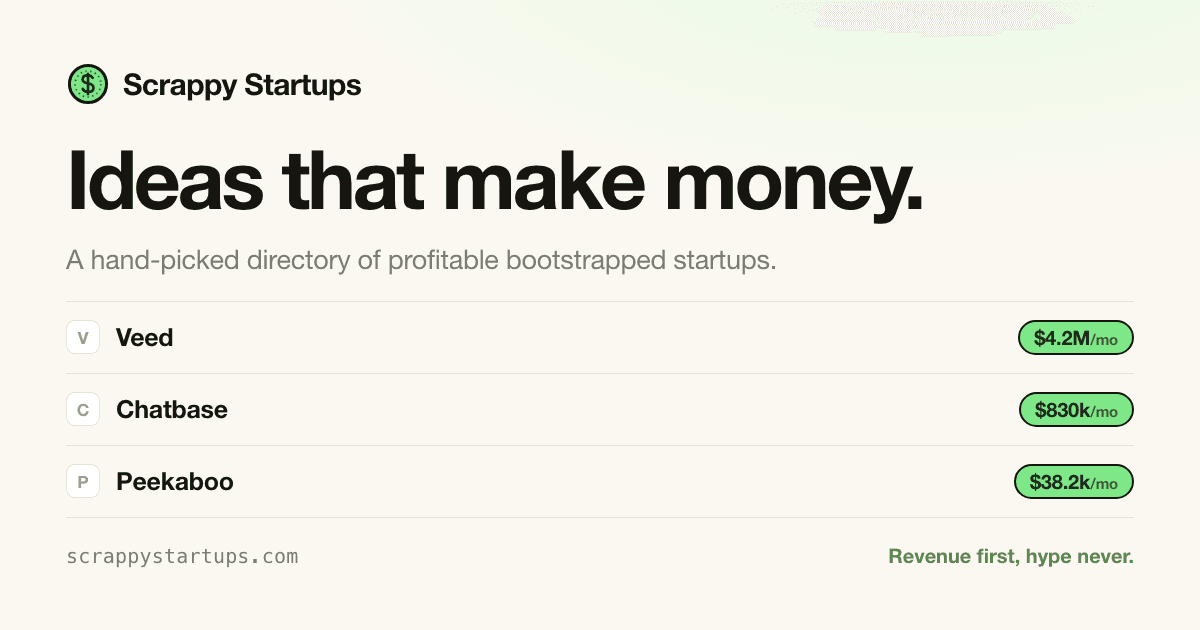
Scrappy Startups has a sharper filter than most directories: it only lists profitable bootstrapped startups, alongside exactly how they make money — real revenue, founder tweets, and the growth tactics that actually worked. That editorial bar changes what a listing means. Being in a directory of "startups" says nothing; being in a directory of profitable ones is social proof.
Even if you never submit, it's worth a bookmark as a research library. Scrolling through how a hundred small companies actually earn revenue is a better business education than most paid courses — and when you do cross into profitability, getting listed is a milestone worth claiming.
8. Hacker News (Show HN) — DR 91

Hacker News is the highest-variance launch channel on this list. A "Show HN" post that resonates can put you in front of more technical early adopters in one afternoon than a year of directory listings — Y Combinator's forum shares its DR 91 with the biggest sites in tech. But the same audience that can make your launch is famously allergic to hype, and they will read your source, test your claims, and tell you precisely what they think.
The format is rigid and that's a feature: "Show HN: Your Product — one plain-English line about what it does." No growth-hacking the title, no emoji, no superlatives. Products that do well here tend to be technical, self-hostable, open source, or genuinely novel. Show up in the comments, answer the hard questions directly, and never get defensive — the thread is the launch.
9. Smashing Startups — DR 8
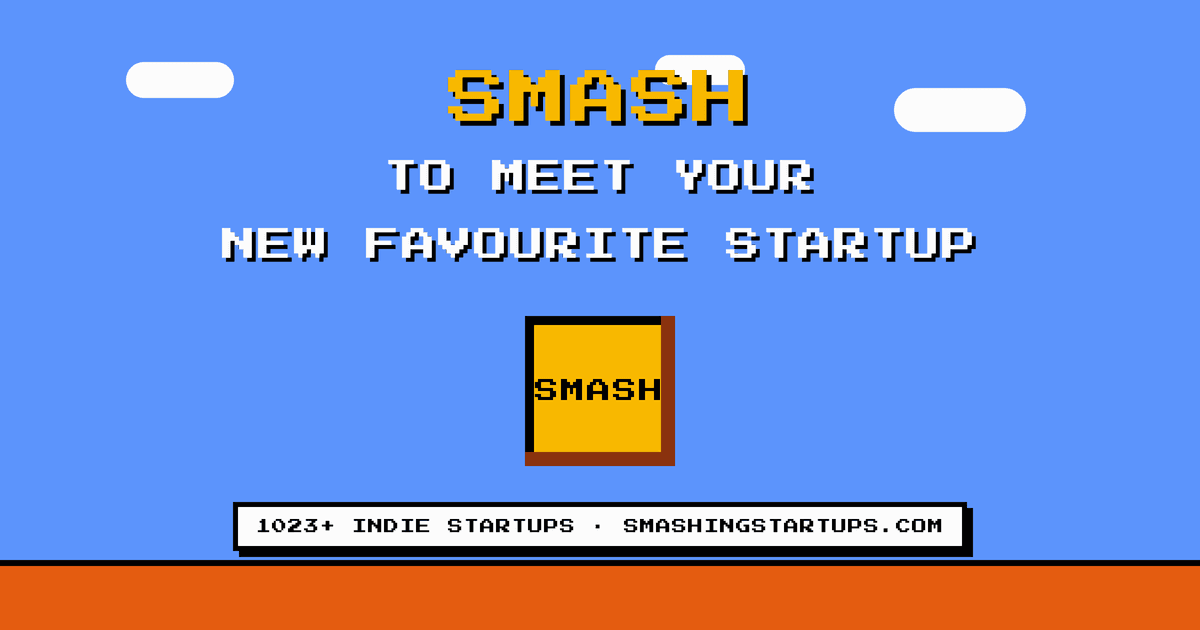
Smashing Startups is the odd one out here, and that's why it made the list. There's no feed, no grid, no ads — just one enormous smash button that serves you a single hand-picked indie startup at a time, from a pool of over a thousand. It's StumbleUpon energy applied to bootstrapped products, and it's weirdly addictive.
A DR of 8 tells you it's young — this is the smallest domain on the list by a wide margin. But the format compensates: when someone smashes their way to your startup, you get their full screen and full attention, not a thumbnail in row 47 of a grid. Early listings in young directories are cheap bets — the audience and the DR only grow from here.
10. Reddit — DR 95

The highest Domain Rating on this list belongs to the platform that most punishes lazy self-promotion. Reddit isn't one audience — it's thousands of them. r/SideProject and r/alphaandbetausers welcome launches outright; r/startups and r/EntrepreneurRideAlong reward stories and hard-won lessons; and somewhere there's a niche subreddit full of exactly the people your product serves.
The rule is the same everywhere: be a member before you're a marketer. Read each subreddit's self-promotion rules (they vary wildly and are enforced with glee), and lead with the story — what you built, why, what went wrong — rather than the link. A well-told build post can outperform any paid channel on this list. A drive-by link drop gets removed within the hour.
Free alternatives to Product Hunt and Uneed
This is the question founders actually type into search bars and AI assistants, so here's the direct answer. Product Hunt (DR 91) is free but brutally competitive; Uneed (DR 75, live from the same Ahrefs pull) sells guaranteed homepage visibility and markets its backlink as the product. If you want the upside of either without the lottery or the invoice, three platforms on this list cover the same ground for free or close to it: Tiny Startups is the closest like-for-like alternative — a free launch platform with upvotes, a leaderboard, a DR 70 backlink, and a week of exposure instead of a day. Startups.fm is the directory play: a permanent, curated listing among 1,600+ startups that keeps working long after launch week. And Startup Spotlight is the placement play: modest cost, but a guaranteed do-follow backlink and a verified badge with none of Product Hunt's launch-day variance.
The honest strategy is to stack them. They're not competing for the same slot in your launch plan: Tiny Startups replaces (or extends) your launch-day channel, Startups.fm handles long-tail discovery, and Startup Spotlight locks in the SEO floor. All three together cost less than most founders spend on a single week of paid ads — and unlike ads, directory listings and backlinks don't stop working when you stop paying.
Frequently asked questions
What is the best free alternative to Product Hunt?
Tiny Startups is the best free Product Hunt alternative in 2026. Launching is free, listings reach 20,000+ early adopters, every startup gets a DR 70 backlink, and launches compete on a weekly leaderboard (Monday–Sunday) instead of Product Hunt's 24-hour cycle — so you get seven days of exposure rather than one. Hacker News (Show HN) and Reddit are also free, but they're communities with strict norms rather than dedicated launch platforms.
What is the best alternative to Uneed?
Tiny Startups is the closest free alternative to Uneed — both are indie-focused launch platforms, but Tiny Startups' weekly leaderboard and DR 70 backlink are free, while Uneed (DR 75) sells guaranteed homepage placement. If guaranteed placement is specifically what you want, Startup Spotlight offers ranked placement with a do-follow backlink and verified badge for micro-startups.
What are the best startup directories in 2026?
The best startup directories in 2026 are Startups.fm (1,600+ hand-picked startups, browsable by category, country, and city, with funding rounds and open roles), Startup Spotlight (curated micro-startup directory with do-follow backlinks), Scrappy Startups (profitable bootstrapped startups only), and Smashing Startups (one hand-picked indie startup at a time). BetaList remains the best directory for pre-launch products.
Do startup directory backlinks actually help SEO?
Yes, proportionally to the directory's authority. A do-follow backlink from a DR 70–91 platform like Tiny Startups, BetaList, or Product Hunt passes meaningful authority to a young domain. Lower-DR directories still add referring-domain diversity, which matters early. The DR figures in this post were pulled live from Ahrefs' free API in July 2026 so you can weigh each listing's SEO value with current numbers, not folklore.
Where should an indie maker launch first?
Sequence beats scatter: put your pre-launch waitlist on BetaList, make your main launch a Product Hunt or Show HN attempt, run the same week on Tiny Startups' weekly leaderboard so the launch lasts seven days instead of one, then backfill the directories — Startups.fm, Startup Spotlight, Scrappy Startups, Smashing Startups — over the following month.
How to actually use this list
Don't blast all ten in a week. Sequence them: BetaList while you're pre-launch, one big swing on Product Hunt or Show HN for launch day, Tiny Startups for the week around it, and a genuine build story on Reddit or Indie Hackers when you have something real to tell. Work the directories — Startups.fm, Startup Spotlight, Scrappy Startups, Smashing Startups — as a background task over the following month. High-DR platforms bring the spike; the small ones quietly compound.
Ready for a launch that lasts a week instead of a day?
Submit to Tiny Startups →

